
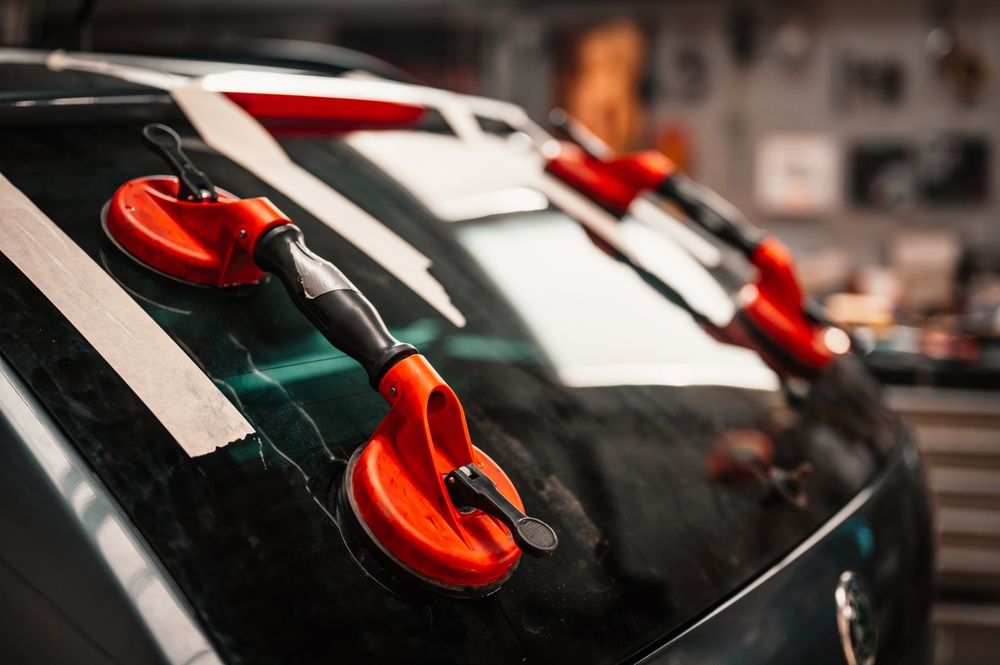
Rear Glass Damage That Cannot Wait
Back and side glass replacement in Williston for shattered rear windows, broken fixed panels, and damaged rear side glass on cars, trucks, and SUVs
Rear window assemblies and fixed rear side panels sit in positions that make temporary fixes impractical—plastic sheeting over a back glass opening blocks rear visibility and leaves the vehicle interior unprotected. Blaine's Auto Glass replaces back glass, rear side glass, and other fixed panels on vehicles across Williston and surrounding communities, with mobile service that brings the work to wherever the vehicle is located. Whether the rear glass is stationary or includes a moveable lower pane, the crew handles both configurations.
Replacing rear glass involves removing the fasteners or seals that hold the damaged panel against the body opening, clearing the frame of any adhesive residue or debris, and installing a new panel sized and rated for that specific vehicle. Blaine's Auto Glass uses Mitchell Glass Cloud to match replacement panels by VIN before the appointment, which eliminates the back-and-forth of repeat callbacks or VIN confirmations that delay scheduling. Once the panel is seated and the fastening method is restored—whether that is a urethane bead, mechanical clips, or a combination—the crew tests the seal before closing the job.
Contact Blaine's Auto Glass to confirm the replacement panel for your vehicle and set a time for mobile service at your address.
What Rear Glass Replacement Actually Accomplishes
Back glass on modern vehicles often carries additional complexity beyond the glass itself: rear defrosters, heated wiper systems, and antenna leads are embedded or bonded into many rear window assemblies. During replacement, these connections are transferred or re-established with the new panel so that defrost and antenna functions work correctly after installation. A replacement that ignores these embedded systems leaves the defrost grid nonfunctional, which is a detail worth confirming when evaluating whether a glass crew has handled the full scope of the work.
Once the new panel is installed, rear visibility is fully restored, the defrost grid operates as it should, and the interior is sealed against outside air and road debris. On vehicles with a moveable rear lower pane—common on older pickup configurations and some SUVs—the panel will latch, release, and stay closed under vibration, which broken or improperly installed glass fails to do.
Rear side glass panels, which are fixed in most configurations, sit in bonded or clipped openings along the C- or D-pillar of the vehicle body. Because these panels are structural contributors to the rigidity of the rear body section, their installation follows the same fastening standard as the original assembly. This is not a component where an approximate fit or skipped adhesive step is acceptable, and the crew confirms seating and alignment before the work is considered complete.
Answers About How Rear Glass Replacement Is Done
The questions below address what happens during back and side glass replacement, from how panels are sourced to what you can check once the work is finished. Properties in and around Williston include a range of vehicle types—from late-model crew cabs to older SUVs—and the panel configurations vary accordingly.
How does the crew determine whether rear glass is stationary or moveable?
The vehicle's body style, trim level, and model year determine whether the rear glass is fixed or includes a moveable section. Blaine's Auto Glass confirms this through VIN lookup before arriving, so the correct panel type is already on the vehicle before installation begins.
What happens to the embedded defrost grid when rear glass is replaced?
When the original rear glass carries a defrost grid, the replacement panel includes a matching grid. The electrical connection to the grid is re-established during installation and tested before the crew leaves—you can verify this by activating the defrost and checking for uniform heat distribution across the panel.
How is the old adhesive removed before the new panel is installed?
Urethane residue from the original seal is cut and scraped from the pinch weld before the new bead is applied. Leaving old adhesive in place prevents a proper seal on the new panel and can cause leaks or wind noise even after the new glass is installed.
When is the vehicle safe to drive after rear glass replacement?
Rear glass bonded with urethane requires time for the adhesive to reach minimum drive-away strength. The crew will specify the wait period based on the adhesive used, which varies depending on ambient conditions and the product's rated cure profile.
What does a correctly installed rear panel look like from the outside?
The glass should sit flush with the surrounding body panel, with no visible gaps between the edge of the glass and the pinch weld or trim. From inside the vehicle, the headliner and trim clips should be fully reseated and the defrost indicator light should function when activated.
Blaine's Auto Glass provides mobile rear and side glass replacement across Williston, eliminating the need to drive a compromised vehicle to a fixed shop location. To schedule service and confirm part availability for your specific vehicle, call (701) 713-4100. Blaine's Auto Glass also replaces back and side glass in Watford City, Tioga, Ray, Alexander, and Trenton.