Custom Glass Cut for Equipment That Cannot Stop
Machinery glass cutting and installation in Williston for farm equipment, industrial machinery, and heavy equipment operating across the region
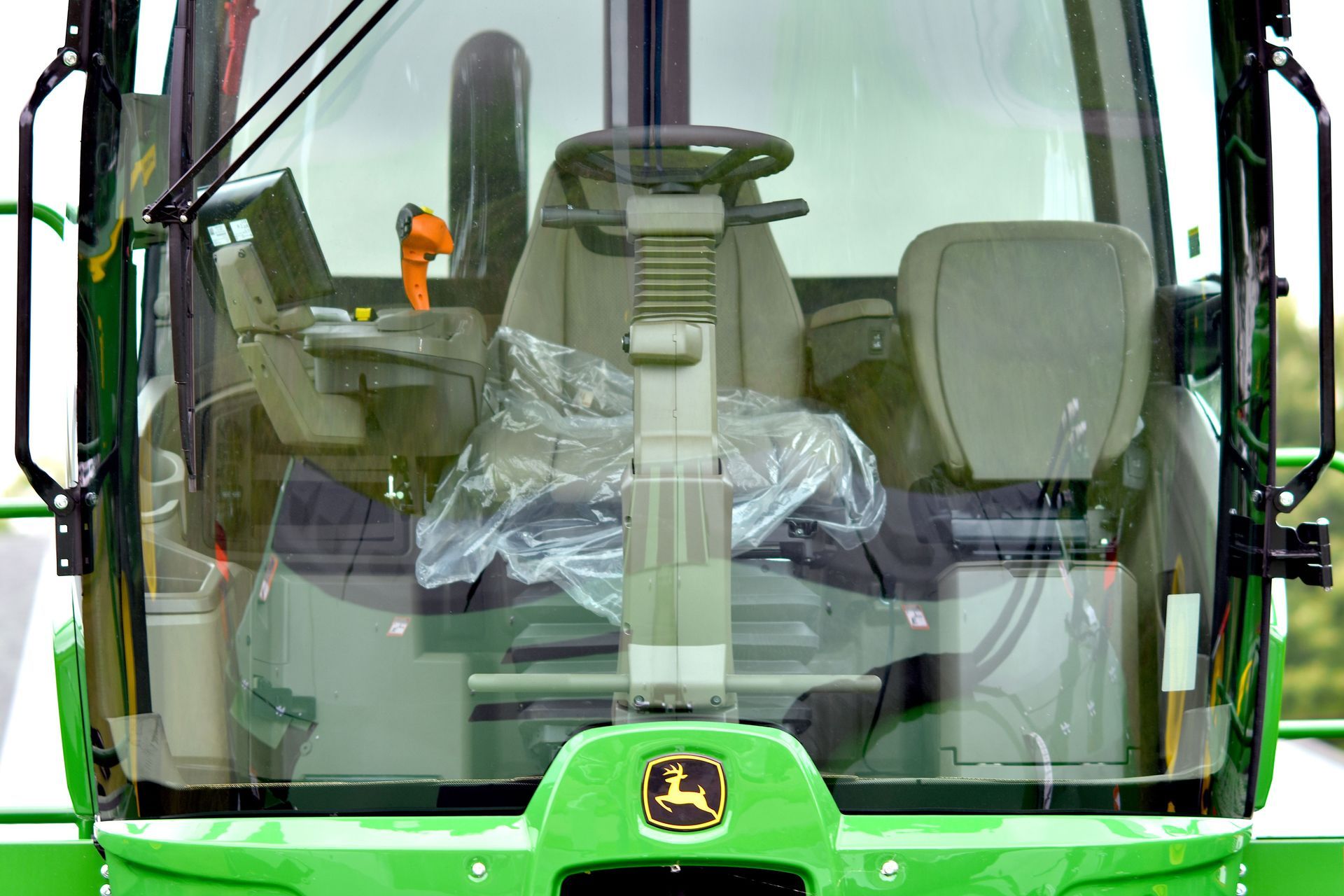
Agricultural and industrial operations across the Williston basin run on equipment where glass is not interchangeable—combine cabs, loader enclosures, and industrial machinery use glass cut to fit proprietary frames that standard auto glass stock will not match. Blaine's Auto Glass cuts and installs custom replacement glass for farm equipment, industrial machinery, and heavy equipment across North Dakota and Montana within 50 miles of Williston. Every piece is measured or cut from specifications before installation, with no reliance on off-the-shelf sizing that forces workarounds in the frame.
The process begins with direct measurement of the existing frame or work from manufacturer specifications when the original glass is too damaged to use as a template. Using Mitchell Glass Cloud CRM, the crew records measurements and generates accurate quotes without extended back-and-forth—a meaningful advantage when equipment is sitting idle during a harvest window or a production shift. The replacement piece is cut to exact dimensions, sealed appropriately for the equipment type, and installed either on-site or at the shop depending on the machine's mobility and the glass position.
Arrange a measurement appointment with Blaine's Auto Glass to get an accurate quote and confirm lead time for your equipment's replacement glass.
Why Precision Cutting Matters for Equipment Glass
Equipment glass is not a commodity part. The tolerances on a combine cab or a loader enclosure are tighter than they appear—glass that is cut even a few millimeters short will not seal correctly, leaving gaps that allow dust intrusion into the operator cab, vibration that loosens the panel over time, and structural gaps that compromise visibility during operation. Blaine's Auto Glass measures directly from the frame and cuts to match, rather than approximating from a standard size and shimming the difference.
Once the replacement glass is installed and sealed, the operator cab returns to full enclosure—dust no longer enters through a failed edge seal, visibility across the panel is unobstructed, and the frame perimeter shows a continuous, flush fit with no visible gap. That matters practically during long field or site hours where cab condition directly affects the operator's ability to work.
Agricultural operations around Tioga and Alexander represent exactly the kind of mixed-use equipment profile this service is built for—tractors, combines, and skid steers that spend long hours in the field and cannot be sidelined for days waiting on shipped glass. Custom cutting and on-site or shop installation keeps downtime to the minimum the glass replacement itself requires.
Answers About How Machinery Glass Work Gets Done
Equipment operators and farm managers tend to ask practical questions about fit, sequencing, and what happens when the original glass is too damaged to use as a reference. The answers below address how each of those situations is handled.
How is the replacement glass sized when the original panel is shattered and cannot be measured directly?
The crew works from manufacturer specifications or frame measurements taken at the opening itself—frame dimensions are the governing reference, not the broken glass, so an accurate replacement can still be cut without an intact original.
What sealing method is used for equipment glass installation?
The sealant type is matched to the equipment application—machinery glass that experiences significant vibration requires a flexible, high-adhesion sealant rather than the rigid urethane used in passenger vehicle replacements, which would crack under the same operating stresses.
How does Mitchell Glass Cloud improve the quoting process for specialty equipment glass?
The system stores measurements and vehicle or equipment data so quotes are generated from accurate records rather than estimates, eliminating the repeated follow-up calls that slow down scheduling when equipment is already out of service.
When is on-site installation the better option versus bringing the equipment to the shop?
Large or non-mobile equipment—combines, excavators, or fixed industrial machinery—is typically better served by on-site installation since transporting it requires additional logistics; smaller equipment that can be trailered is often brought to the shop when the glass position makes field access difficult.
What should you check after custom equipment glass is installed to confirm the fit is correct?
Run a hand along the inside perimeter of the installed panel to confirm the seal is continuous, check that the glass does not flex or shift when moderate pressure is applied to the center, and verify that no light gap is visible around the frame edge from inside the cab.
Blaine's Auto Glass also performs machinery glass cutting and installation in Watford City, Tioga, Ray, Alexander, and Trenton. To get an accurate measurement and quote for your equipment's replacement glass, call (701) 713-4100.